

Most people think about battery storage alongside solar panels.
But battery storage can also play an important role in a wider home energy system, especially when there is another source of generation involved.
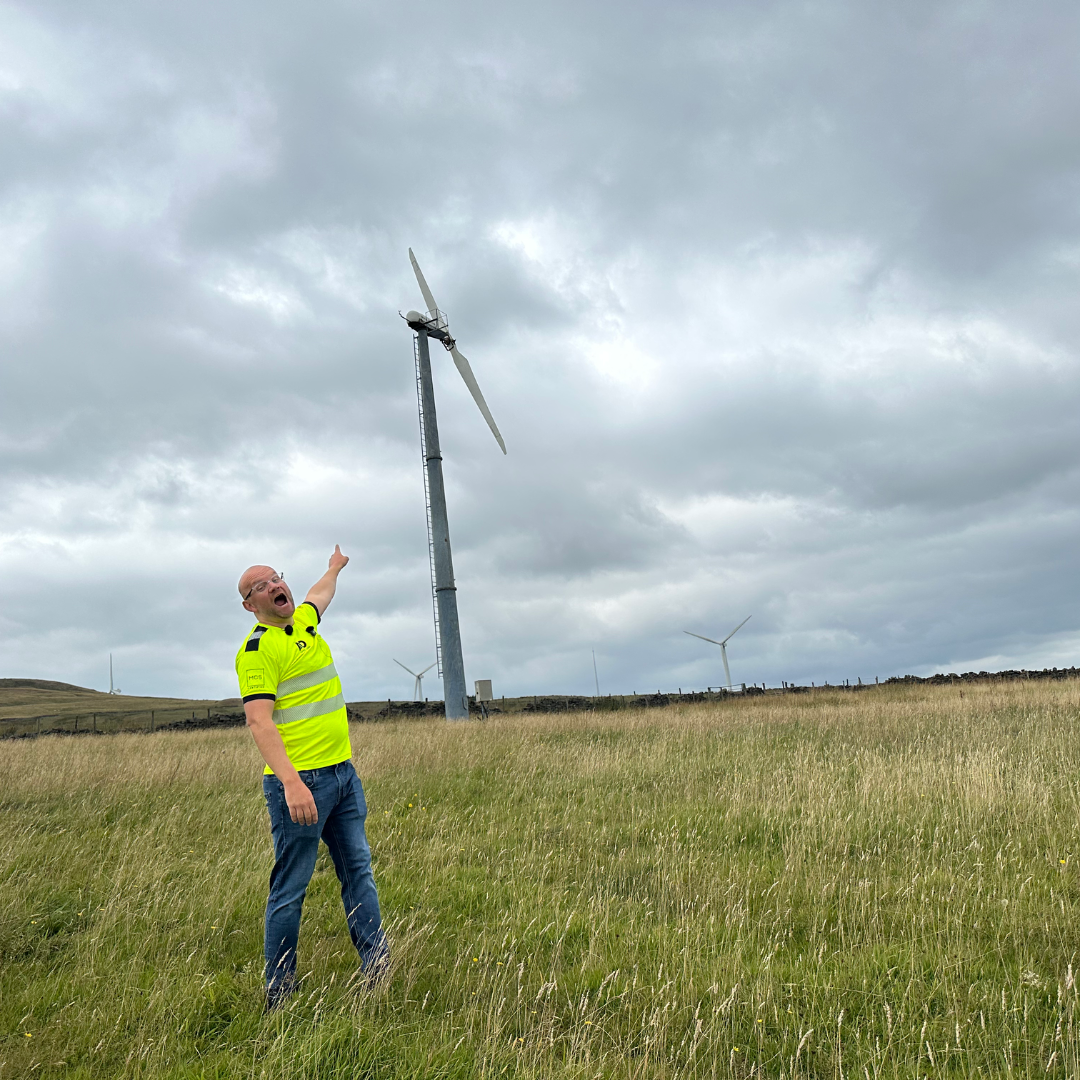
On this project, the customer already had a wind turbine producing a serious amount of electricity.
The turbine had generated around 23,000kWh in roughly six and a half months, which is far more than a typical domestic solar panel system would generate in a full year.
The challenge was not simply generating energy.
The challenge was making better use of it.
That is where the SigEnergy SigenStor system came in.
What was installed?
For this project, Apex Doma installed a large SigEnergy SigenStor battery storage system to work alongside the customer’s existing wind turbine.
The system included:
- SigEnergy SigenStor three-phase inverter
- 25kW inverter capacity
- Five battery modules
- 45kWh of battery storage
- C60-2 Gateway
- Backup capability
- Future expansion options
This is not a typical domestic setup.
It was designed for a high-demand rural property with significant electric heating, an additional Airbnb space and a wind turbine capable of producing a large amount of energy.
The customer may also add solar panels or another battery stack in future, so the system needed to allow room for growth.

Why use battery storage with a wind turbine?
A wind turbine can generate a lot of energy when conditions are right.
Unlike solar panels, which usually build and drop generation gradually through the day, a wind turbine can hit higher outputs more regularly when the wind is strong.
That creates a different kind of design challenge.
When the turbine is producing well, the home needs somewhere for that energy to go.
Without suitable battery storage, more energy may end up being exported to the grid instead of being used on site.
Battery storage helps the property:
- Capture more of the energy generated by the wind turbine
- Store energy for later use
- Support the home when the wind drops
- Reduce reliance on the grid
- Make better use of cheaper off-peak electricity
- Provide backup power when paired with the right gateway
- Create a more flexible home energy setup
In simple terms, the battery acts like a storage buffer.
When the turbine produces more than the home needs, the battery can store some of that energy. When the wind drops or demand rises, the home can draw from the battery.
Why SigEnergy SigenStor was chosen
The customer needed a system that could handle a high level of demand.
This property is not a small, low-energy home. It has electric heating, multiple loads and an additional Airbnb space, so the inverter needed to be able to deliver power properly when the home needed it.
That is why the system used a 25kW three-phase SigEnergy SigenStor inverter.
Battery capacity matters, but inverter output matters too.
You can think of the batteries like a water barrel and the inverter like the pump. It is useful to have a large amount of stored energy, but the system also needs to move that energy into the home at a suitable rate.
For this property, the inverter needed to “pack a punch”.
It had to work with the battery storage, the wind turbine and the high electrical demand of the home.
Why this is different from a normal solar battery setup
Most battery storage systems are designed with solar panels in mind.
There is a lot of established data around solar generation, panel output, battery sizing and expected usage.
Wind turbine battery storage is more niche.
The generation pattern is different, the power output can be more variable and the design has to account for how the turbine behaves in real conditions.
On this project, the customer had existing generation data from the wind turbine, which helped inform the design.
That data showed a high level of generation, which made the case for a larger battery storage system stronger.
The goal was to design around the customer’s real consumption and real generation, rather than guessing.
How much energy can a domestic wind turbine generate?
The wind turbine on this project had generated around 23,000kWh in about six and a half months.
That is a huge amount of energy.
For context, many home solar panel systems generate somewhere around a few thousand kilowatt hours per year, depending on system size, roof layout and conditions.
This wind turbine was operating on a very windy rural site, right at the top of a hill.
That location matters.
Wind turbines need the right conditions to make sense. A turbine in a strong, exposed location can perform very differently from one in a sheltered or built-up area.
This is one of the reasons wind turbines are not suitable for most homes.
They can generate a lot of energy, but only when the site, planning, demand and budget make sense.
Why the property needed such a large battery
The battery system included 45kWh of storage.
That sounds like a lot, and it is.
But storage capacity has to be viewed in context.
This property has a much higher energy demand than an average home. It includes electric heating and two property uses in one setup, with the main home and an Airbnb space.
In a lower-demand home, 45kWh could last a long time.
On this site, the battery could be used much more quickly because the property uses so much electricity.
That is why battery sizing should always relate to the home.
A large battery is not automatically right or wrong. It depends on:
- How much energy the home uses
- When the home uses energy
- How much generation is available
- The inverter size
- The supply type
- Backup requirements
- Future expansion plans
For this customer, a larger battery made sense because the turbine could fill it quickly and the property had the demand to use it.
What does the Gateway do?
The Gateway is a key part of the system.
A battery and inverter can work without a Gateway, but if the grid goes down, many systems will shut off unless the correct backup equipment is installed.
On this project, the Gateway allows the battery storage system to support the property in the event of a power cut.
That matters on a rural, electric-heavy property.
The system uses a C60-2 Gateway, which also gives the customer more flexibility for the future. It allows the option to add another inverter and another battery stack later if needed.
That future expansion was part of the design thinking.
It is often better to plan for future growth at the start than to box the system in too early.
Why three-phase power matters
This project uses a three-phase system.
Most UK homes have a single-phase electricity supply. Larger homes, rural properties, commercial buildings or high-demand homes may have three-phase power.
Three-phase power can support larger electrical loads, bigger inverters and faster EV charging options.
It can also become important where a property has:
- Electric heating
- Larger battery storage
- A high-demand home
- A wind turbine
- A larger solar system
- Rapid EV charging
- Multiple high-load appliances
Not every home needs three-phase power.
But when the demand is high enough, it can become an important part of the design.
If a property only has single-phase power and needs to upgrade, that process can involve the local Distribution Network Operator. Costs can vary significantly depending on the site and the distance from the local supply infrastructure.
That is why three-phase requirements should be considered early.
How does a wind turbine work with battery storage?
A wind turbine generates electricity when the blades turn.
In simple terms, the turbine creates electrical energy from movement. That energy then needs to be converted and managed before it can be used safely in the home.
The process can involve several stages of conversion.
The turbine may generate AC that changes in voltage and frequency. That energy can then be converted and managed so it can supply the property, charge the battery or export to the grid.
The battery storage system then acts as a flexible store.
When the turbine is generating more than the home needs, the system can capture some of that energy.
When the wind stops, the battery can supply the home instead.
This creates a more balanced system.
The property can use:
- Wind generation when available
- Battery storage when wind drops
- Off-peak grid electricity when useful
- Solar generation in future if added
That is why Ian described it as a small energy ecosystem.
Can you combine wind, solar and battery storage?
Yes, in some cases wind, solar and battery storage can work together as part of a wider home energy system.
That does not mean every property should do it.
Most homes are better suited to solar panels and battery storage because solar is easier to install, easier to plan and more widely suitable.
Wind turbines are much more site-specific.
They need the right location, enough space, suitable wind conditions, planning consideration and a clear reason for the investment.
But for the right property, wind generation can work alongside battery storage and solar.
On this project, the customer started with the wind turbine, added battery storage and kept the option open to add solar panels later.
That staged approach can make sense when the system has been designed with future expansion in mind.
How much does a wind turbine cost?
The wind turbine on this project was a substantial installation.
A turbine like this, with the concrete base and site work involved, can cost around £50,000.
That is not a small investment.
However, the customer’s turbine had been installed for over ten years and had reportedly paid for itself within around four to five years.
The customer also benefited from existing feed-in tariff payments.
That kind of return is not something everyone should expect.
It depends heavily on the site, wind conditions, planning, generation level, installation cost, energy usage and any tariff arrangements.
For most homeowners, solar panels and battery storage will be a more realistic starting point.
But this project shows what can happen when a wind turbine is in the right place and paired with a suitable battery storage system.
Are wind turbines suitable for most homes?
Wind turbines are not suitable for most homes.
They can work extremely well in the right location, but the right location is the key part.
A good site usually needs:
- Strong wind exposure
- Enough space
- Suitable distance from neighbouring properties
- Planning suitability
- A clear route for installation
- A strong enough demand for the energy
- A realistic budget
- Good technical design
Planning can also be more complicated than solar panels.
There may be local planning considerations, conservation restrictions, aviation concerns or other site-specific requirements.
That is why wind turbines remain much less common than solar panels.
They can be powerful, but they are harder to make work for the average domestic property.
Why battery storage is becoming more flexible
This project shows how battery storage is changing.
It is no longer just about storing solar energy during the day and using it at night.
Modern battery systems can form part of a wider energy setup that may include:
- Solar panels
- Wind generation
- Off-peak tariffs
- EV charging
- Heat pumps
- Backup power
- Smart controls
- Future expansion
- Virtual power plant options
The technology is becoming more flexible.
The important part is system design.
A battery should not be chosen just because it is a popular product. It needs to match the property, supply, generation source, demand, tariff and long-term plan.
What homeowners can learn from this project
This is not a normal home battery installation.
It is a high-demand rural system with wind generation, a three-phase supply and a large battery stack.
But the lessons still apply to more typical homes.
Before choosing a battery storage system, ask:
- What is the home’s actual electricity demand?
- How much generation is available?
- Is the property single-phase or three-phase?
- How much battery storage is genuinely useful?
- What inverter size is needed?
- Is backup power required?
- Could the system expand later?
- Will solar, wind, EV charging or off-peak tariffs be included?
- How will the system be controlled?
- What happens during a power cut?
Good battery storage design starts with the property.
Not with a generic package.
Final thoughts
Battery storage can do far more than simply store excess solar energy.
On the right property, it can also work alongside a wind turbine, support high electrical demand, provide backup power and create a more flexible home energy system.
This project used a SigEnergy SigenStor three-phase inverter, 45kWh of battery storage and a C60-2 Gateway to help manage energy from a high-output wind turbine on a rural property.
It is a niche setup, but it shows where home energy technology is heading.
The future is not just solar panels on a roof.
It is homes using generation, storage, tariffs and smart controls together in a way that suits the property.
If you already have renewable generation, or you are considering solar panels, battery storage or a more complex home energy setup, Apex Doma can help design a system around your home, usage and long-term plans.
FAQs
Yes, battery storage can work with a wind turbine in some systems. The design depends on the turbine, inverter setup, property demand, electrical supply and how the energy needs to be managed.
No. Apex Doma does not install wind turbines. We install solar panels, battery storage and related home energy systems. On this project, we installed the battery storage system that works alongside the customer’s existing wind turbine.
A battery can store excess energy generated by the wind turbine and make it available later when the home needs it. This can help the property use more of its own generation instead of relying on the grid.
The right battery size depends on the wind turbine output, the home’s electricity demand, the inverter size, backup requirements and how the customer wants to use the energy. There is no one-size-fits-all answer.
In some systems, solar panels and a wind turbine can both work as part of a wider battery storage setup. The design needs to be planned properly so the equipment works safely and efficiently.
A three-phase battery storage system works with a three-phase electrical supply. This can suit larger homes or properties with higher demand, larger inverters, EV charging, heat pumps or other high-load equipment.
SigEnergy SigenStor is a modular battery storage and inverter system. It can be used in different configurations, including larger three-phase setups for high-demand homes.
A Gateway helps manage backup power and system control. In the event of a power cut, the right Gateway setup can allow selected loads or parts of the property to keep running from the battery.
Domestic wind turbines can be worthwhile in the right location, especially where there is strong wind exposure and high energy demand. However, they are not suitable for most homes and often need more planning than solar panels.
For most homes, solar panels are the more practical option. Wind turbines are more site-specific and usually make sense only where the location, planning, budget and energy demand all support the case.