

Rising UK energy costs and unpredictable pricing have made it harder for households and businesses to keep electricity bills under control. When energy prices change throughout the day, relying solely on the grid can leave you paying more than you need to.
Sustainability matters, and battery storage offers a practical way to store energy, become more independent of the grid, and reduce your energy bills.
We’ll walk you through how battery storage works, how it can reduce your bills, and how it lets you regain control over how and when you use energy.
What Is Battery Storage and How Does It Work?
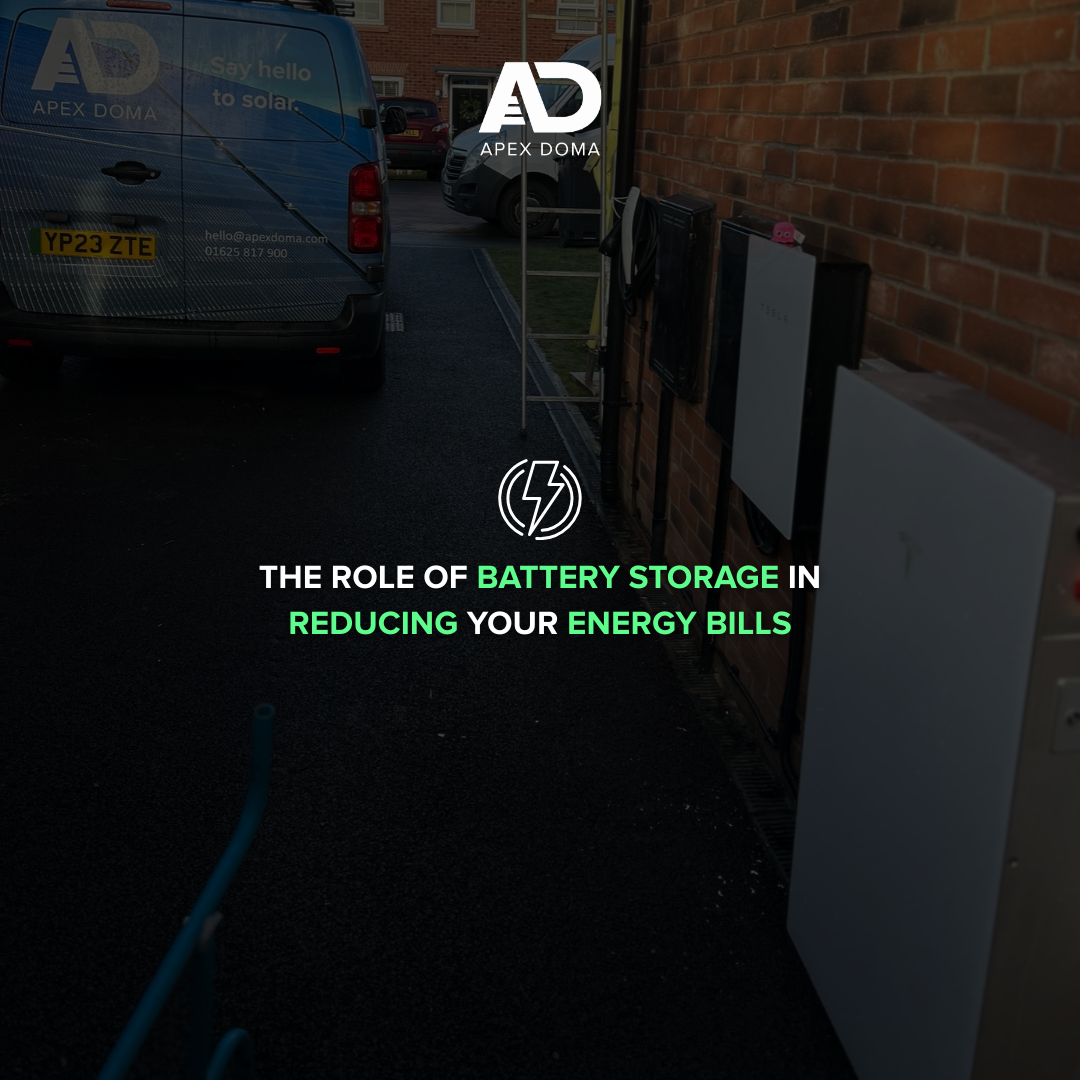
Battery storage systems work quietly in the background, storing electricity until it’s needed. Once energy is stored in the battery, it can be released automatically to power your home or business at the right times, without you having to manage anything day to day.
There are two main types of battery storage. Solar-linked systems store surplus energy generated by solar panels, which might otherwise be sent back to the grid. Grid-charged systems store electricity from the grid, often during off-peak hours when prices are lower.
In both cases, the system prioritises using stored energy first, helping you rely less on the grid during busier, more expensive periods.
To talk through battery storage in more detail, book a free consultation with our team. We’re here to answer your questions and offer practical guidance.
How Battery Storage Reduces Your Energy Bills
Battery storage reduces energy bills by shifting when electricity is drawn from the grid. Instead of relying on grid power during high-cost periods, stored electricity can be used when prices are at their highest.
Electricity prices in the UK vary throughout the day, with lower rates available during off-peak hours and higher charges applied during peak periods. You can use these price differences to your advantage with battery storage, particularly when paired with off-peak or smart tariffs.
Battery storage can also limit the impact of short-term demand spikes, which often occur in the early evening when energy use increases, helping to avoid sudden increases in electricity costs.
For a deeper look at costs, savings, and practical considerations, explore our Solar Advice Hub on battery storage systems.
Battery Storage and Time-of-Use Tariffs
Time-of-use tariffs charge different electricity rates depending on the time of day, with lower prices available during quieter periods and higher charges during busier hours. If most of your energy use falls into those higher-priced times, it can feel like your bills are working against you.
Our battery storage can change that balance. It gives you more flexibility over how and when you use energy, making it easier to get value from your tariff rather than being caught out by price changes. For many households and businesses, this means fewer surprises and more confidence in day-to-day energy costs.
When set up around how you actually use energy, battery storage can help time-of-use tariffs work in your favour. It supports smoother pricing and more manageable energy costs across typical usage patterns, without requiring changes to your daily routine.
If you generate your own electricity, battery storage can also work alongside export schemes. In the UK, the Smart Export Guarantee (SEG) pays households and businesses for electricity you export to the grid from renewable sources, such as solar panels.
Battery Storage With Solar Panels vs Without Solar
Battery storage can reduce energy bills both with and without solar panels, and the method of saving will differ depending on the setup. Understanding these differences helps you decide which setup aligns best with your energy use and longer-term goals.
Here’s how each setup compares:
Battery storage with solar panels:
- Stores excess solar energy generated during the day for later use.
- Reduces reliance on grid electricity during evenings and peak periods.
- Often offers stronger long-term control over energy bills, as more energy is generated on-site.
- Suits households and businesses already using, or planning to install, solar panels.
Battery storage without solar panels:
- Stores electricity from the grid during lower-cost periods.
- Supports better bill management on off-peak or smart tariffs.
- Requires no changes to how energy is generated at the property.
- Suits properties looking to improve cost control without installing solar panels.
Solar paired with battery storage offers greater long-term savings, but standalone battery systems can still deliver meaningful results when matched to the right usage patterns.
If you’d like to explore which battery storage setup suits your property and energy use, get in touch, and we’ll be happy to help.
Costs vs Savings: Is Battery Storage Worth It?
Battery storage can be worth it if it’s matched to how your property uses energy and the tariff you are on. For households and businesses that use more electricity during peak-rate periods or have access to off-peak or smart tariffs, the potential for savings is often stronger.
The level of return depends on several factors, including property size, your daily usage patterns, and how electricity is priced throughout the day. Those with higher energy demand are better placed to benefit, particularly when stored energy replaces higher-cost grid electricity.
Savings tend to build up over time. For some, the main benefit is lower bills, while for others it’s the added predictability of energy costs. Looking realistically at both costs and expected savings can help you.
Who Benefits Most From Battery Storage?
Battery storage can offer value across different property types, but some situations are better suited than others.
Battery storage is often well-suited if you are:
- A homeowner with solar panels looking to use more of the energy they generate.
- Living in a home on a smart or off-peak tariff, where prices vary throughout the day.
- Running a small business with higher energy use during peak hours.
- Part of a social housing or shared development where energy use is spread across multiple households.
If you’re considering battery storage and want to understand what to look out for, you may find it helpful to read the top 5 things you should consider before buying solar & battery storage.
Battery Storage FAQs
Battery storage systems last around 10 to 15 years. Most modern systems are lithium-ion-based and come with manufacturer warranties that typically cover around 10 years or a set number of charge cycles.
Yes, battery storage works with smart meters. Having a smart meter can be particularly useful if you are on a smart or time-of-use tariff, as it allows you to track electricity pricing throughout the day.
The amount you can save with battery storage depends on how you use energy and the tariff you are on.
Savings are often higher if you use more electricity during peak-rate periods or have access to off-peak or smart tariffs. In these cases, stored energy can reduce how much higher-priced electricity you need to buy from the grid.